
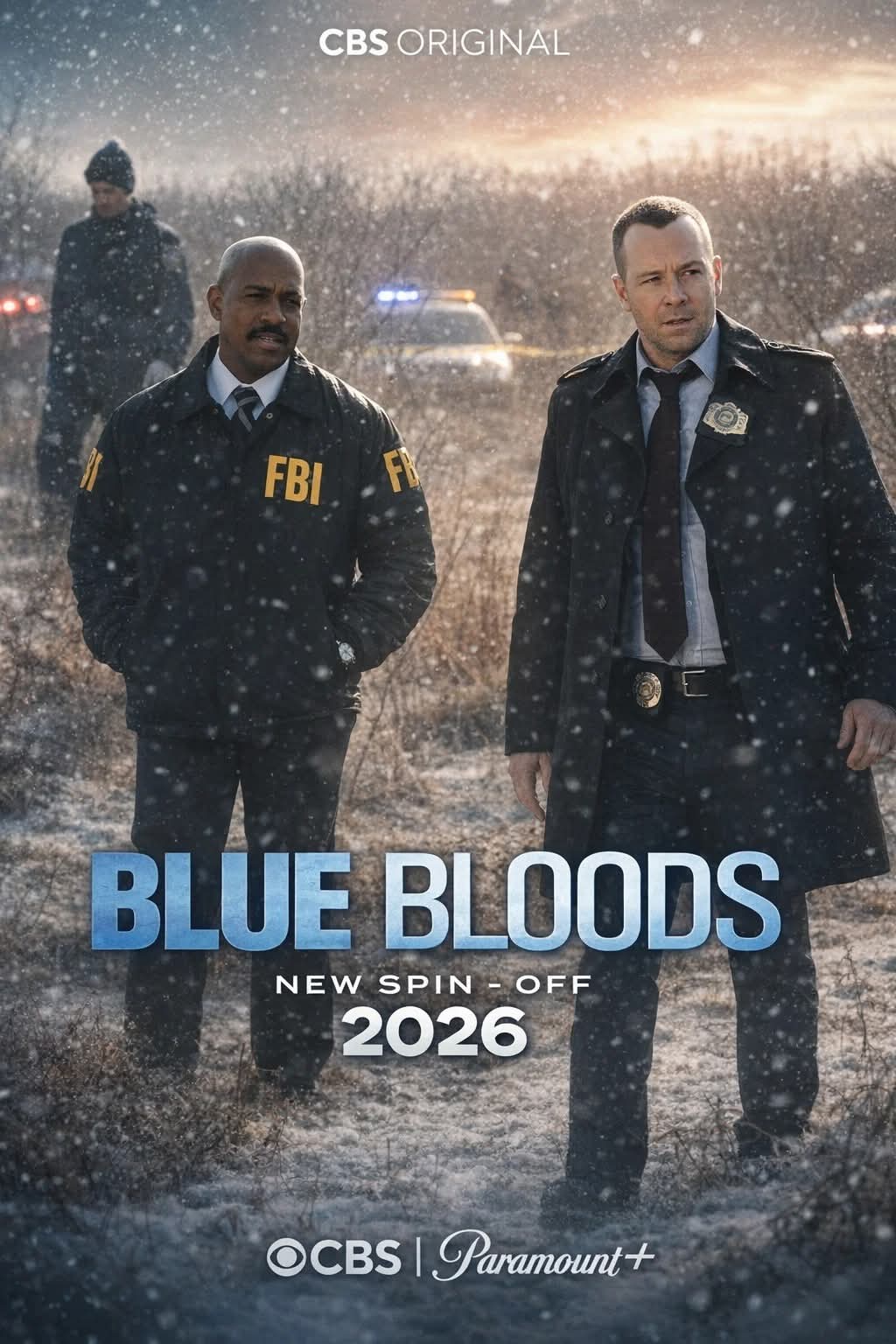
For more than a decade, Blue Bloods succeeded not by chasing spectacle, but by building a world that felt real. It lived in family dinners, moral conflicts, institutional pressure, and the quiet burden of responsibility. When the original series ended, many fans feared that world would fade — preserved only through reruns and memory.
The spin-off proves the opposite.
Rather than simply introducing new characters, it expands the Blue Bloods universe itself — broadening its scope, deepening its themes, and extending its emotional reach while staying grounded in the values that made the franchise endure.
A World Bigger Than One City
New York City was always more than a backdrop in Blue Bloods — it was part of the story’s DNA. Its politics, communities, and institutions shaped every narrative. But the heart of the series was never confined to geography.
At its core, the show explored universal tensions: duty versus family, loyalty versus conscience, authority versus accountability. These struggles weren’t unique to New York — they exist in every city, every department, every generation.
The spin-off leans into that truth. By moving beyond the original setting, it acknowledges that the questions Blue Bloods asked were never tied to one place — they echo far beyond it.
Expansion, Not Replacement
One of the spin-off’s biggest strengths is what it refuses to do.
It doesn’t replace the Reagan family.
It doesn’t erase the past.
It doesn’t reboot what already worked.
Instead, it builds outward.
The original series becomes a foundation, not a limitation — a legacy that supports new stories rather than restricting them. Longtime fans keep their emotional connection, while new viewers gain a wider entry point into the world.
A Broader Look at Leadership and Law Enforcement
Blue Bloods always went deeper than standard policing stories, focusing on how leadership decisions affect families, communities, and institutions.
The spin-off widens that perspective.
With new cities, new power structures, and new leadership styles, the franchise can explore law enforcement from multiple angles. Every environment brings different pressures. Every department has its own culture. Every leader carries a distinct philosophy.
Yet the central question remains unchanged: how do you do the right thing when every choice comes with consequences?
New Characters, New Points of View
New faces are inevitable — but here, they’re not replacements. They’re perspectives.
Some lead with caution instead of instinct.
Some challenge tradition rather than inherit it.
Some carry authority without the support of legacy.
These contrasts don’t weaken the story. They deepen it, forcing both the characters and the audience to reconsider what they thought they understood.
Why the Story Had to Grow
After fourteen seasons, Blue Bloods faced a crossroads. Staying within its original structure risked repetition. Ending entirely risked leaving its biggest questions unfinished.
The spin-off chooses a third path: expansion.
Not a restart. Not a farewell.
An evolution — one that proves the world of Blue Bloods was always bigger than a single family, a single city, or a single story.
Be First to Comment