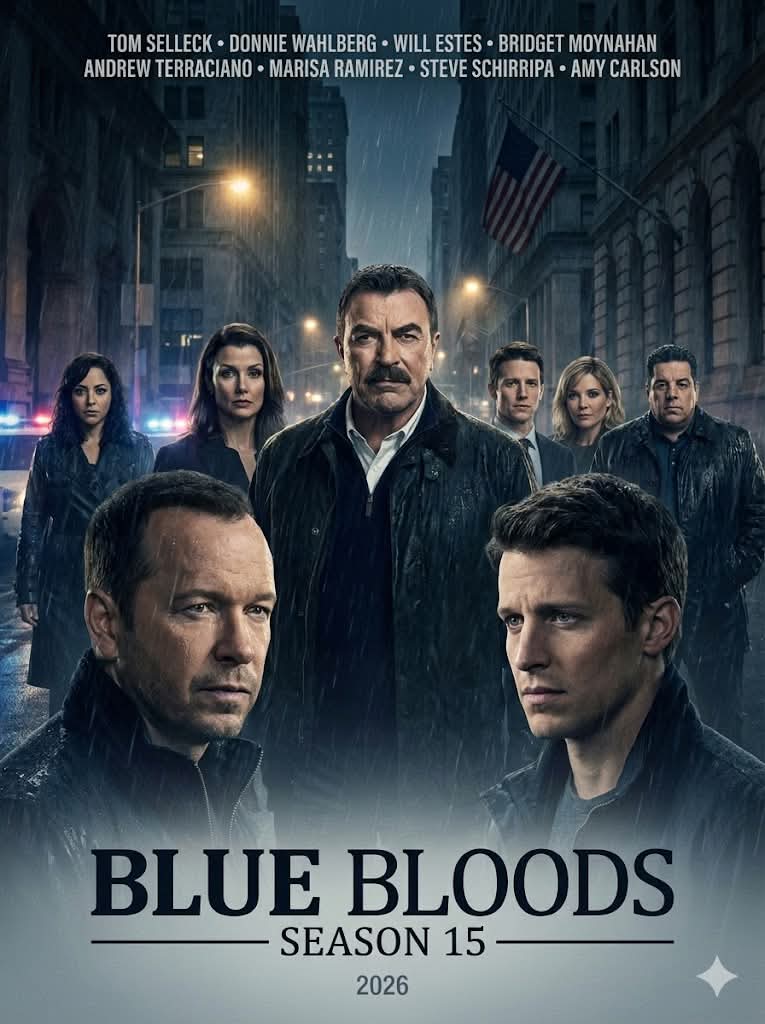
Blue Bloods — Season 15 (2026) leans fully into what the series has become: not just a crime drama, but a long-running portrait of duty passed down through generations. The focus is less on big twists and more on the moral weight of policing, where every decision must balance law, loyalty, and public trust.
Cases still drive the story, but outcomes feel more complex and less final. Justice isn’t presented as a clear win — it’s an ongoing process shaped by pressure, compromise, and accountability. The show highlights how order is maintained through constant effort rather than decisive victories.
Tom Selleck’s Frank Reagan remains the moral center, leading through experience and reflection rather than force. Donnie Wahlberg’s Danny operates with hardened instinct, Will Estes’ Jamie wrestles with idealism versus reality, and Bridget Moynahan’s Erin navigates the space between justice and practicality. The broader ensemble reinforces the idea that policing is shared responsibility, not the work of one hero.
Season 15 keeps the show’s familiar style — steady pacing, grounded storytelling, and the iconic Reagan family dinners that serve as spaces for debate and reflection. These traditions give the series stability while allowing it to keep exploring difficult questions.
At this stage, Blue Bloods isn’t chasing reinvention. Instead, it focuses on responsibility, legacy, and the imperfect nature of justice. The series endures because it keeps returning to the same central idea: doing the job matters, even when the answers are never simple.